As Kenyan scholar and novelist Ngũgĩ wa Thiong'o reminds us in his book Writing Against Neocolonialism, African writers who emerged after World War II experienced three defining eras: the age of anti-colonial struggle, the age of independence, and the age of neocolonialism. While political independence spread throughout Africa during the twentieth century, the cultural and linguistic legacy of colonialism remains deeply embedded in many African societies today, with one of the most enduring manifestations of neocolonialism being language.
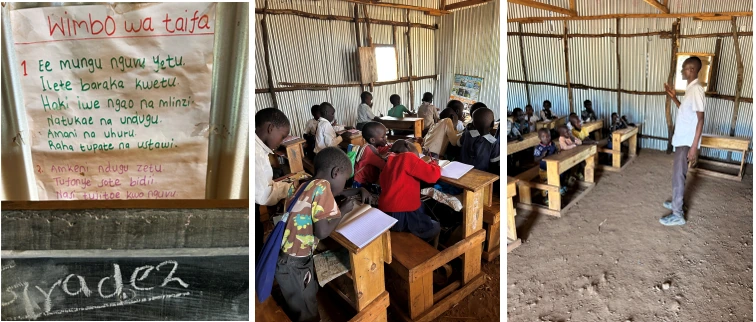
Across Africa, millions of children are often educated primarily in English and French while indigenous languages are increasingly marginalized. Consequently, many young Africans grow up unable to communicate fluently with their elders, access oral traditions, or fully participate in the cultural inheritance of their communities. This raises a question that remains as relevant today as it was during Ngũgĩ wa Thiong'o's time: Whose language tells Africa's stories?
The answer to this rhetoric question matters because language is more than a tool of communication. Language carries memory, identity, historical truths, and ways of understanding the world. When a language disappears, entire systems of knowledge disappear with it. Given this starting point, preserving African languages must be understood as a cultural responsibility, and an act of resistance, against neocolonialism.
For Whom Does the Writer in a Neocolonial State Write For?
For the African writer, the choice of language is never neutral; it often determines the audience long before the first word is written. As Ngũgĩ wa Thiong'o argues in Writing Against Neocolonialism, writers operating within a neocolonial state frequently confront the fear of what he describes as "write and risk damnation." Faced with this reality, the writer encounters a difficult set of limited choices:
- They may choose silence, engaging in self-censorship and relinquishing their role as a critical voice in society.
- They may align themselves with the oppressive state, becoming a defender of the status quo and its prevailing narratives.
- They may choose resistance, risking censorship, imprisonment, and exile from the very communities and experiences that nourish their creative imagination (like many African scholars of the 1960s)
Indeed, these tensions reveal a deeper contradiction: for whom does the African writer write for? If the African writer seeks to serve the people, what language should they use? Should the African writer portray society “in its unchangingness or in changingness”? Should the African writer recognize reality as capable of transformation through collective action? The answers to these questions are far from simple given the geopolitical and tribalistic communal aspects associated with languages in Africa. However, to show reality from the perspective of the people—the agents of social, political, and cultural change—means exposing the forces that sustain inequality and domination. In a neocolonial state, such portrayal by the writer is once again to write and risk damnation by the state.
The Need to Speak Our Mothers’ Tongue
In 2022, I had the privilege of meeting my 107-year-old great-grandmother during my homecoming visit to Cameroon. As a member of the Bamileke tribe, my ability to fluently speak our dialect allowed me to converse with her directly without needing a translator. During that visit, she sang and recorded a prayer for me in our native language, a recording that remains the most treasured memory on my phone.
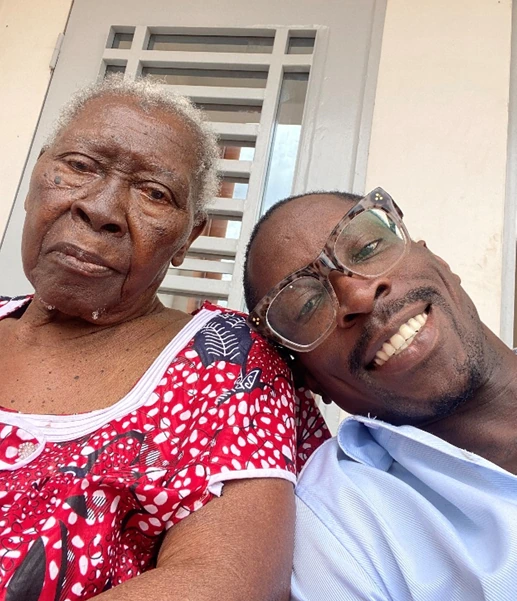
Reflecting on this anecdotal experience with Nana Angela revealed something profound: language made that moment possible.
Today, millions of African children may never share a similar experience with their grandparents or great-grandparents. As indigenous languages disappear from homes, schools, and public life, children lose access to conversations, stories, wisdom, and traditions that have been passed from generation to generation. Consequently, the loss of a language is more than the loss of words; it is the loss of cultural memory.
Living in the International Decade of Indigenous Languages
The urgency of Ngũgĩ' wa Thiong’o’s argument is evident in the current state of linguistic diversity around the world. According to UNESCO, the global community is facing a critical moment in language preservation, prompting the United Nations to designate 2022–2032 as the International Decade of Indigenous Languages. The initiative was established to respond to the growing number of languages at risk of disappearance and to mobilize efforts toward their revitalization and preservation. If African languages are to survive, they must exist in classrooms, books, and educational programs where children can actively read, write, and create knowledge in their own languages.
Conclusion
Recent research published by the Carnegie Mellon University shows that children learn best when instruction begins in a language they understand. The research findings shows that mother-tongue instruction strengthens literacy development, improves comprehension, and provides a stronger foundation for acquiring additional languages later in life. Despite these benefits, colonial languages continue to dominate African educational systems, often limiting access and participation for children whose first language is an indigenous African language.
It is important to note that Africa is home to extraordinary linguistic diversity, with an estimated 1,500–2,000 languages spoken across the continent. Yet many of these languages are endangered as younger generations increasingly adopt dominant national and global languages. When an African child writes their story in Bamileke, Kiswahili, Yoruba, or any other African language, that child preserves their cultural heritage and community identity. Most importantly, the child is participating in a form of authorship that challenges the lingering hierarchies of colonial language systems. Indeed, for every African who cannot write or speak the language of their ancestors, slowly becomes disconnected from a vital part of their identity and culture.