Beginning at the earliest years of elementary school, children engage in a range of recurrent, goal-directed activities using a particular system of knowledge to meet goals set by their principals and school districts. Children need these rooms to create new narratives about their lives and take on new identities as writers. In these classrooms is where children can begin to tell their own stories and grow into their identities as writers. Indeed, research shows that both teacher-student relations and peer relations among students influence the formation of students’ writer identity in the classroom. This is particularly relevant as sociocultural theorist Jessie Goicoechea reminds us that “human being is becoming – striving to be what it is not (yet).”
However, classroom practices often marginalize children whose interest and lived experiences may not be valued by the teacher. In one case study, a researcher asked a fifth grader named Dylan to draw what he enjoys reading or writing. Dylan’s drawing of a buck with blood dripping from its head reflected his desire to write about “something else.” Frustrated by his teacher’s restriction, Dylan told the researcher “…but we’re not allowed…she just wants us to write about sunny days and stuff.” Dylan’s example shows how a meaningful part of his life and identity was treated as off-limits by his teacher, consequently reinforcing a message about which stories belong in the classroom, and which do not.
Given that identity (in this case children as writers) is in development and continuously renegotiated with others through contextual relationships (in classrooms with teachers and peers), the piloted Children’s Authorship Program (CAP) was designed to intentionally provide children with the space to freely express themselves without limiting restrictive guidelines.
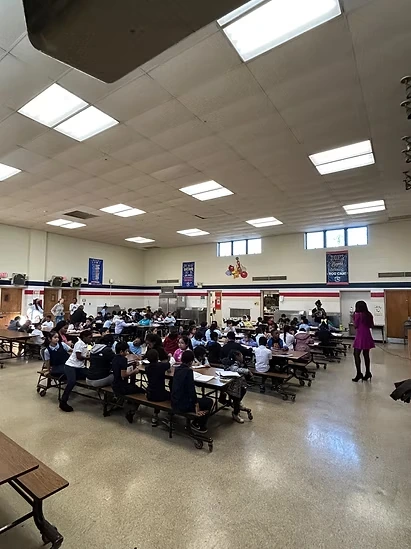
JCTBF Children's Authorship Program
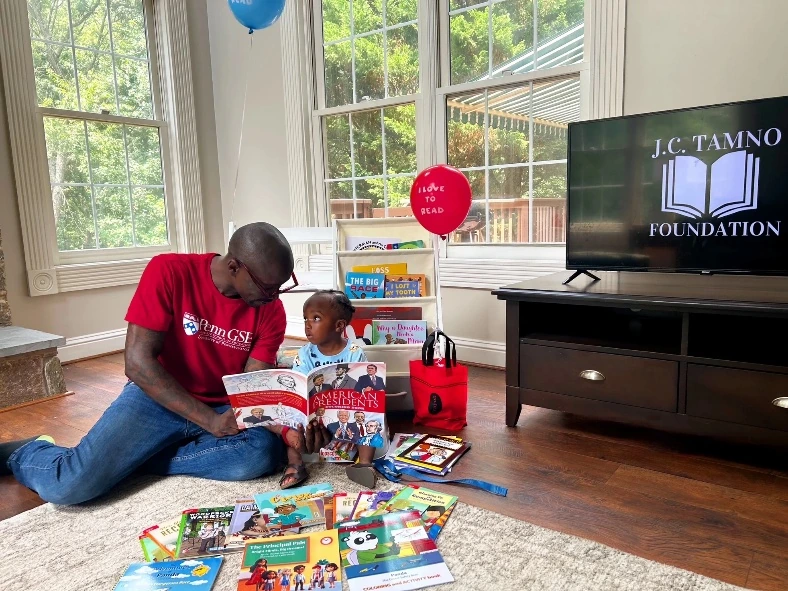
The Foundation's Children’s Authorship Program begins with Dr. Rachel’s Read Aloud The Principal Pals: Bright Minds, Big Dreams!, centering the students reflected in the book as she tell them about her day as an elementary school principal. Following this read aloud session, Dr. Rachel leads a series of writers workshop over a period of 3-months in which the children are guided through the process of developing and writing their own books.
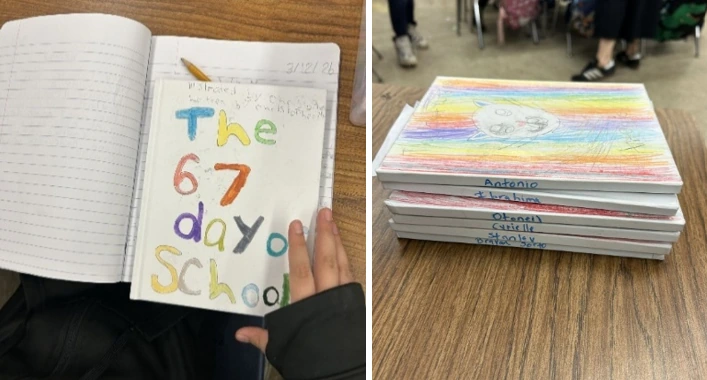
CAP launched on the 67th day of the school year, an unplanned detail that was very special to the children as Dr. Rachel led the writing workshop. Leaning into the humor and cultural significance of “6-7” as their insiders’ joke, several children chose to center their stories around the 67th day of school. Memorable moments like the 67th day of the school year highlight what makes CAP powerful: when given the space, children naturally draw from their own worlds, interests, and shared culture to shape writing that feels authentic to them.
Amplifying Children’s Voices: The Importance of Seeing Themselves as Writers
Within the contextual relationship of a school, this identity is in development and continuously renegotiated with teachers and peers. This identity development as student leaders became evident when the children took turns reading their books aloud to their classmates. Seated at the front of the room, each child stepped into an authoritative role, confidently sharing their work while their peers listened with attention and respect.
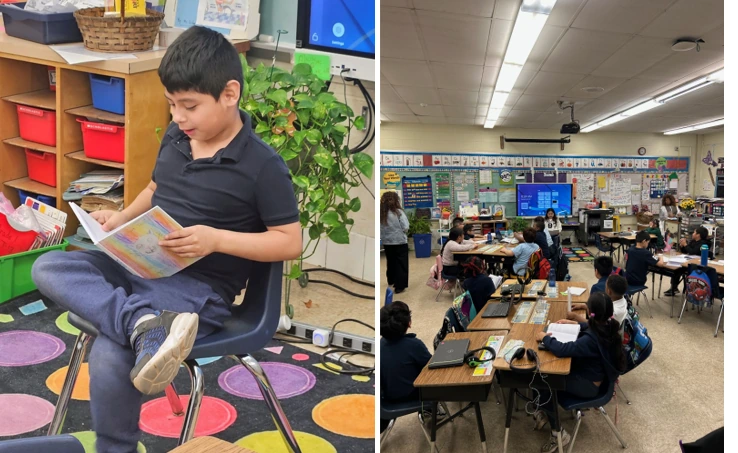
Literacy practices such as the JCTBF's Children's Authorship Program reminds us that when children are given the freedom to write from their own experiences, they begin to see themselves as writers whose voices matter.
In partnership with elementary school principal and early childhood educator Dr. Rachel Edoho-Eket, CAP seeks to intentionally create spaces where children can express themselves freely without the restrictive guidelines that often limit their creativity as writers. Edoho-Eket recalls a wonderful three months of learning with these young authors and she believes that “it is critically important for students to have rich experiences in their early childhood years to build a strong foundation for reading and writing. She adds, “The most compelling result of this program is that children see themselves reflected in the stories that they created. How powerful!”