According to a 2019 study by Ohio State University, children who are read just one book a day will hear about 290,000 more words by age 5 than those don’t regularly read books with a parent or caregiver. When parents read at least 5 books a day to their children, those children will hear nearly 1.4 million more words by the time they turn five than children who were not read to at all. This statistic speaks volumes about the power of early literacy exposures.
Indeed, the words children hear in their earliest years are critical to building the very foundation of learning, thinking, and thriving in adulthood. Yet for far too many children, this foundational exposure to language is inconsistent or altogether absent. Known as the "million-word gap," such variability in early reading experiences leads to the vast difference in the number of words heard by children who are regularly read to versus those who are not.
In this article, we explore how parents can play a powerful role in closing the million-word gap, and why everyday reading can shape a child’s future in profound and lasting ways.
Equipping Babies with The Invisible Toolbox
Although a child goes to school to learn new words, the words they already know determines how much of what the teacher says will be understood by the baby. Given that the instruction for the first four years of school is oral, the child who has the largest vocabulary will understand the most, while the child with the smallest vocabulary will be left behind. What’s more, as reading begins, the personal vocabulary of a child will either enhance, or impede, their comprehension.
In her book The Invisible Toolbox: The Power of Reading to Your Child From Birth to Adolescence, Kim J. Dickson eloquently captures this reality:
A child walks through the kindergarten gate with a lunchbox in one hand and an Invisible Toolbox in the other, and in that Toolbox there are resources that will affect their success or failure in school for years to come. By reading to your child from birth, you can ensure your child will be well equipped with these essential tools.
“The neuroscience behind the metaphor of The Invisible Toolbox is astonishing,” says Kim. “Studies show that shared reading stimulates and literally builds a child’s brain with the pre-literacy tools they need in order to learn to read. A large vocabulary is not only one of the most important tools, but is also the #1 predictor of school success.”
Preparing Babies for Lifelong Learning
Throughout the school year, early elementary teachers dedicate themselves to nurturing their students' emerging reading abilities. As shown in the documentary Hopeville: How to Win the Reading Wars, meaningful progress in literacy is often most visible by the end of the academic year. However, the summer months can become a period of regression, unless parents are intentional about continuing literacy at home.
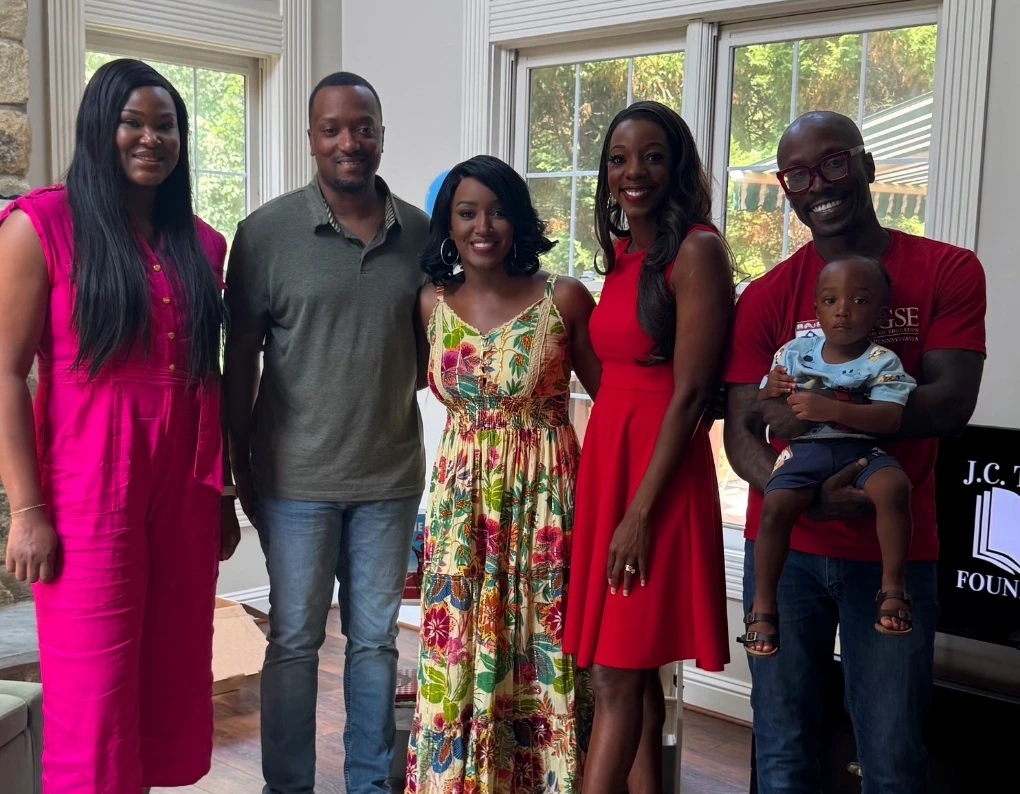
To help bridge that gap, the J.C. Tamno Books Foundation launched the Community Read Aloud Session Program to serve families in the Washington D.C. and Philadelphia area.
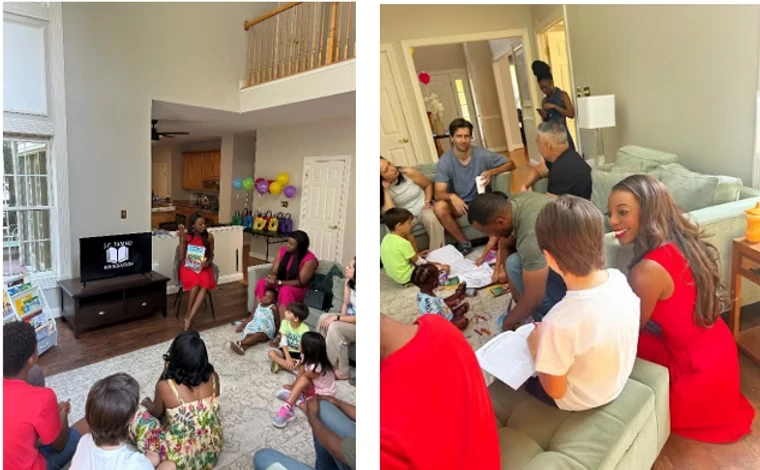
The J.C. Tamno Books Foundation hosted the inaugural of its Community Read Aloud Session on July 26th 2025 in Gaithersburg, Maryland. Dr. Rachel Edoho-Eket, author and elementary school principal, read to the children from her book The Principal Pals: Bright Minds, Big Dreams!
“It was such a joy to open my home for the read-aloud session,” says Destiny Drake West. “My child, along with other children from the community, were completely engaged; from the stories to the conversations that followed. Creating space for literacy, joy, and connection like this is so needed, and I’m grateful to the organization for bringing it directly into our neighborhood” Destiny added.
An Analysis of the OSU Case Study
In collaboration with the Columbus Metropolitan Library, OSU researchers analyzed the top 100 circulated books for both board books (targeting infants and toddlers) and picture books (targeting preschoolers). The researchers counted how many words were in a randomly selected sample of 30 books of each type and found that board books contained an average of 140 words, while picture books contained an average of 228 words.
With that information, the researchers calculated how many words a child would hear from birth through their 5th birthday at different levels of reading. They assumed that babies would be read board books through their 3rd birthday and picture books the next two years, and that every reading session would include one book
Based on these calculations, here’s how many words a baby would have heard by the time they become 5 years old, depending on how often their parents read to them:
- Never read to: 4,662 words
- 1-2 reading sessions per week: 63,570 words
- 3-5 reading sessions per week: 169,520 words
- Daily, 296,660 words: and
- Five books a day: 1,483,300 words.
The results are undeniable: the million-word gap is real, and its ripple effects significantly shape the education of a child.
Community Read Aloud Sessions as a Call to Action
Fostering a love of reading early on helps ensure every child enters kindergarten ready to thrive. Indeed, when families, caregivers, and early educators prioritize talking, reading, and singing with children from birth, we equip them with the tools to succeed before they ever set foot in a classroom.
“As a current school principal and an early childhood certified teacher, I’ve seen firsthand how early literacy lays the foundation for lifelong learning,” says Dr. Rachel Edoho-Eket. “Read-alouds are one of the most powerful tools we have. They build vocabulary, spark imagination, and develop listening and comprehension skills in young children,” she adds.